
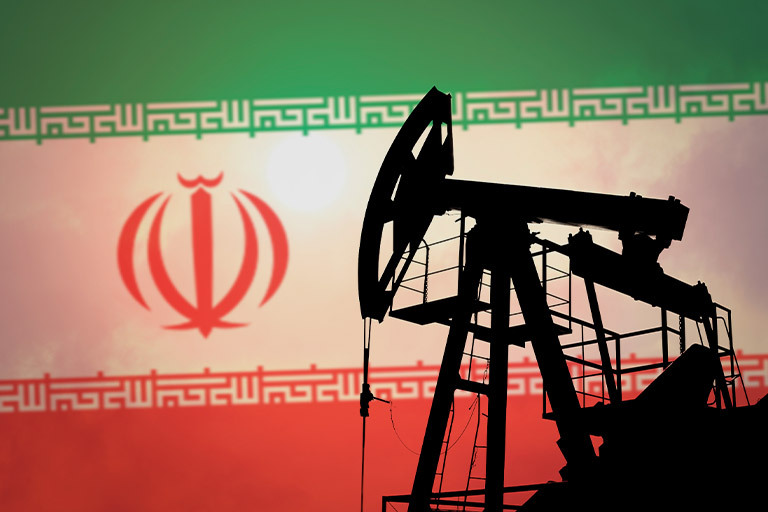
The escalating conflict involving Iran has begun to trigger concerns among economists about possible consequences for the United States economy. Rising fuel prices, financial market volatility and potential disruptions to global oil supply are being closely monitored as tensions in the Middle East intensify. Experts suggest that the overall economic impact will largely depend on the duration of the conflict and the scale of disruption in energy markets.
Gasoline prices in the United States have already started to increase. According to AAA data, the national average reached about $3.20 per gallon, reflecting the early effects of the crisis. Financial markets have also reacted, with stock markets experiencing fluctuations, oil prices rising and bond yields showing signs of instability.
Economists suggest that a brief conflict could lead to limited economic consequences, while a prolonged escalation may push consumer prices higher and slow economic growth. Mark Zandi, chief economist at Moody’s Analytics, indicated that short disruptions to oil supply lasting one or two weeks may not significantly affect the economy. However, disruptions lasting several weeks or months could have more serious consequences.
Strategic oil route fuels global supply concerns
Energy markets remain the main channel through which the conflict could influence the US economy. Oil and gas prices directly affect transportation costs, manufacturing expenses and the prices of many everyday goods, making them a key factor in both consumer spending and business operations. Ramanan Krishnamoorti, a petroleum engineering professor at the University of Houston, noted that oil plays a crucial role in the global movement of goods and people.
Global oil prices jumped following the rise in tensions. Brent crude initially increased by more than 13 percent before easing slightly. Prices remain around $81 per barrel, marking the highest level since last June, although still below the three-year peak of roughly $94 per barrel.
Much of the concern is linked to the Strait of Hormuz, a narrow but highly significant shipping corridor located along Iran’s southern coastline. Nearly one-fifth of the world’s crude oil and liquefied natural gas supply moves through this route. Reports from Iranian state television indicated that a commander from the Islamic Revolutionary Guard Corps stated that the strait had been closed. At the same time, shipping data analysis from S&P Global suggested that tanker traffic through the passage had slowed sharply.
Since oil is traded on an international market, supply disruptions in one region can quickly push prices higher across the world. Economists have warned that threats to vessels travelling through the Strait of Hormuz could trigger a wider energy shock.
Higher fuel costs likely to affect everyday expenses
The surge in oil prices is expected to influence a broad range of goods and services. Increased fuel costs affect not only drivers at gas stations but also transportation and logistics across industries. As operating costs rise for businesses, consumers may see higher prices for groceries, airline tickets and other essential services.
Recent data showed that US gasoline prices recorded their largest single-day increase since March 2022, shortly after Russia invaded Ukraine. Analysts estimate that every $10 increase in oil prices could push the overall US inflation rate up by about 0.15 percentage points.
Inflation in the United States currently stands at around 2.4 percent, according to the Consumer Price Index released by the US Bureau of Labor Statistics. Although this represents the lowest level since May, it still remains above the Federal Reserve’s target rate of 2 percent.
Meanwhile, the conflict could also affect economic growth. A recent government report showed that the US economy expanded at an annualized rate of 1.4 percent during the final quarter of 2025, a sharp slowdown compared with the 4.4 percent growth recorded in the previous quarter. Economists warn that continued geopolitical tensions could further weaken growth prospects while complicating policy decisions for the Federal Reserve as it attempts to manage inflation and maintain economic stability.