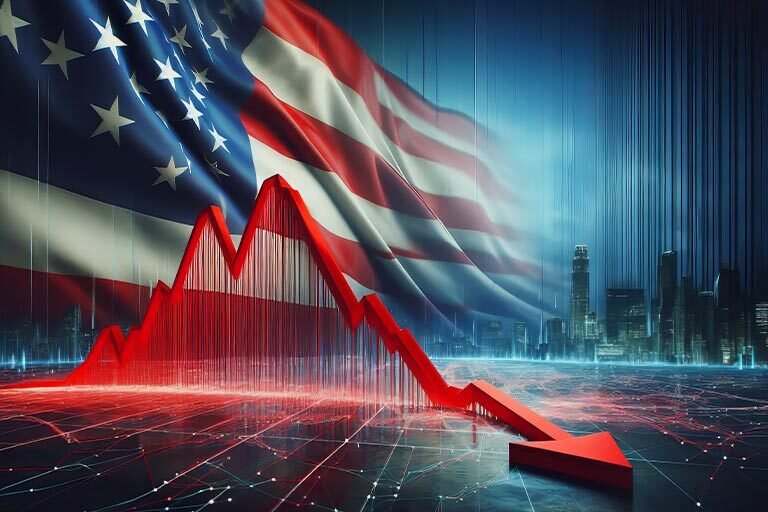
The US economy expanded at a slower-than-expected pace in the second quarter as higher inflation and the economic fallout from the Iran conflict weighed on activity, according to government data released Thursday.
Gross domestic product grew at an annualized rate of 1.5% in the three months through June, down from the 2.1% pace recorded in the previous quarter. The result also fell short of economists’ expectations, although it remained stronger than the 0.5% growth recorded during the final quarter of 2025.
The latest figures reflect an economy operating under pressure from a sharp rise in energy prices following the conflict in the Middle East. The disruption triggered a significant global oil supply shock, pushing fuel costs higher across the United States.
The average US gasoline price reached $4.56 per gallon in May, according to AAA data, before retreating somewhat following a preliminary peace agreement last month.
Inflation has also moved higher. Annual inflation reached 3.5%, significantly above the Federal Reserve’s 2% target. Higher prices have increased costs for households while also adding pressure on businesses.
Despite these challenges, the US labor market has remained relatively resilient. Hiring has held up better than many economists had anticipated, providing continued support for consumer spending even as households contend with higher living costs.
Another major contributor to economic activity has been the rapid expansion of AI investment. Spending on AI infrastructure, including advanced computer chips and data centers, has become an increasingly important source of growth as major US companies continue to commit substantial capital to the technology.
Research from JPMorgan Asset Management found that AI-related investment accounted for roughly two-thirds of US GDP growth in the first half of 2025, exceeding consumer spending’s contribution.
The combination of persistent inflation and a relatively strong labor market has also complicated the Federal Reserve’s interest-rate outlook. Financial markets have heightened expectations that policymakers could eventually raise rates if inflation remains elevated.
Higher interest rates could place additional pressure on economic activity by increasing borrowing costs for companies and consumers, potentially slowing investment and spending in the months ahead.
The Federal Reserve kept its benchmark interest rate unchanged on Wednesday, just hours before the latest GDP figures were released. The policy rate currently stands between 3.5% and 3.75%. Although this is well below the peak reached in 2023, borrowing costs remain considerably higher than the near-zero levels maintained during the early stages of the COVID-19 pandemic.
Federal Reserve Chair Kevin Warsh has continued to emphasize the importance of bringing inflation under control. With prices remaining above the central bank’s target and economic growth losing some momentum, policymakers face the difficult task of balancing price stability against the risk of weakening economic activity.