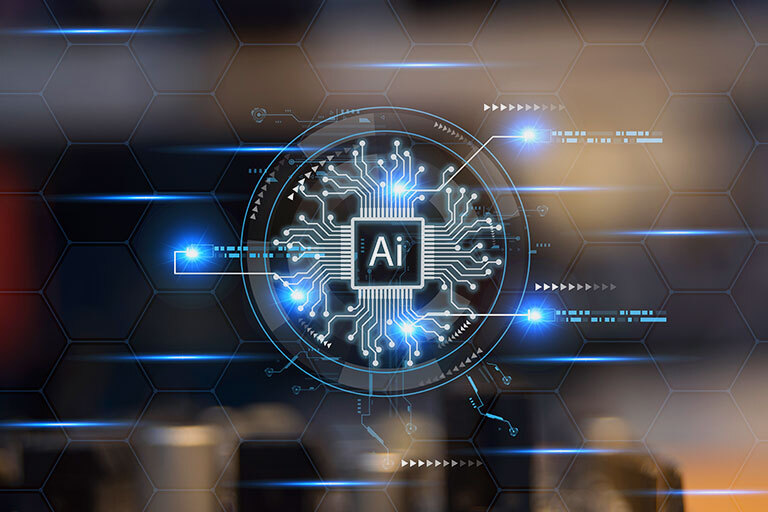
For decades, mainframes have powered some of the world’s most critical business operations, particularly in banking, insurance, government and large enterprises. While organizations have long debated whether to replace these legacy systems, the rise of artificial intelligence is changing the conversation. Instead of encouraging businesses to abandon mainframes altogether, AI is increasingly being viewed as a way to modernize and extend their value.
Why Enterprises Are Taking a Fresh Look at Mainframes
Modernizing mainframe applications has traditionally been one of the most expensive and complex IT initiatives for enterprises. Much of the challenge stems from aging COBOL applications, a programming language that still supports a significant share of global financial transactions. According to IBM, COBOL continues to underpin more than 40% of online banking systems, 80% of in-person credit card transactions and 95% of ATM transactions. However, maintaining and updating these applications has become increasingly difficult as experienced COBOL developers retire and organizations adopt newer programming languages such as Java and Python.
Recent advances in generative AI have sparked fresh interest in simplifying this process. AI-powered coding assistants can analyze legacy code, explain application logic, generate documentation, create test cases and assist developers in translating older applications into modern programming languages. These capabilities have raised expectations that modernization projects could become faster and less resource-intensive.
However, industry analysts caution against assuming AI can single-handedly solve the challenge. Experts note that modernization is not purely a technical exercise but a business decision involving cost, risk, compliance and operational continuity. Organizations must evaluate whether the benefits of replacing existing systems justify the investment and disruption involved.
Research firms have also warned that unrealistic expectations around generative AI could derail modernization initiatives. Gartner recently projected that a majority of mainframe migration projects launched this year could fail because organizations overestimate AI’s ability to automate complex legacy transformations. The recommendation is increasingly shifting toward selective modernization rather than complete platform replacement.
When Keeping the Mainframe Makes Business Sense
This evolving mindset is also influencing vendor strategies. IBM has expanded its portfolio of AI-powered modernization tools, including coding assistants designed to accelerate application updates while allowing customers to continue running workloads on IBM Z systems. The company has also introduced new AI hardware capabilities to support inference directly on mainframes, reducing the need to move sensitive data elsewhere.
Other technology providers are following similar paths. Unisys is working with AWS to offer AI-assisted modernization services, while Microsoft has enhanced Azure Migrate with agentic AI capabilities to transform legacy applications. AWS Transform also uses AI agents to automate multiple stages of migration, from application discovery to code conversion.
Several large enterprises are pursuing their own modernization strategies. Morgan Stanley has developed DevGen.AI, an in-house platform that has modernized more than 17 million lines of COBOL, Natural and PERL code into Java and Python. The platform has reportedly reduced coding tasks that once took a week to less than a day, while enabling developers to focus on higher-value engineering work through continued human oversight.
Industry experts believe AI will ultimately support hybrid modernization strategies rather than trigger mass mainframe exits. Many organizations are expected to retain mission-critical workloads on mainframes while gradually moving suitable applications to cloud environments. As AI continues to mature, enterprises are increasingly viewing it as a practical tool that simplifies modernization efforts, improves developer productivity and helps preserve the long-term value of existing mainframe investments instead of replacing them outright.