
The Yard Was Never Supposed to Matter This Much
Thirty years ago, Lazer Logistics began with a single spotter truck in Macon, Georgia. The job was straightforward: move trailers where they needed to go. The yard itself rarely commanded much attention.
Today, that is changing.
As supply chains become faster, more connected and less forgiving of inefficiency, what happens between the gate and dock can affect everything around it. Gate bottlenecks, poor dock productivity, lost trailer visibility and detention fees accumulate when yard activity sits disconnected from warehouse and over-the-road operations. A misplaced trailer can become a production problem, a transportation problem and ultimately a customer problem.
The yard has become one of the most consequential parts of the modern supply chain. Lazer has spent three decades building around that reality.
What began in 1996 now spans 800+ sites across 42 states and Canada and is trusted by 57 Fortune 500 companies. But the more revealing story is not simply how large Lazer has become. It is how the company evolved as the yard itself changed, from a largely manual operation into an increasingly connected, technology-enabled part of the supply chain.
That evolution centers on Lazer’s “Power Triangle”: technology, operations and people, kept tightly aligned.
From moving trailers to orchestrating the yard
 Lazer’s early business was built around spotting. Over time, the challenge became larger. For many shippers, the yard remained a black hole between transportation and the warehouse. Trailers arrived, moved and waited, while the information needed to coordinate those movements was often fragmented.
Lazer’s answer was to connect the work. Gate operations, spotting, shuttling and trailer tracking can be folded into one workflow, with LLOS, Lazer’s proprietary operating system, serving as the model behind how the company delivers consistent operational outcomes at scale.
LLOS marked Lazer’s evolution from labor provider to operational partner, combining people, process and technology to give customers greater predictability, real-time visibility and control.
Within that environment, YardNexus tracks trailer location, status and contents in real time so dock managers and carriers can coordinate more effectively. NexusLocate and NexusGate support visibility and execution, while Uncle Phil AI brings operational intelligence into daily decision-making. The technology is designed to help people make better decisions and deliver safer, more consistent outcomes, not replace them.
A million-dollar question
That operating philosophy was tested during a recent engagement with a national retail distributor.
Lazer had supported the company across nine distribution centers since 2018 when a newly hired EVP and Chief Supply Chain Officer asked a straightforward question: Would it be cheaper to bring yard operations in-house?
On paper, the answer appeared to be yes. Internal projections suggested savings of roughly $1 million annually, based on driver wages, overtime, equipment and maintenance.
Rather than defend its position with sales talk, Lazer proposed an open-book comparison.
The analysis surfaced more than 20 additional cost variables missing from the client’s original model. Once considered, true insourcing costs ran 30% higher than projected. Outsourcing remained 10 to 12% cost-effective while shifting operational risk to Lazer.
The client stayed, won over by transparency rather than price.
The example illustrates something broader: yard performance is shaped by far more than the visible cost of a driver and truck.
People still run the operation
That same thinking shapes how Lazer approaches its workforce. Technology is intended to amplify what people do, not replace them.
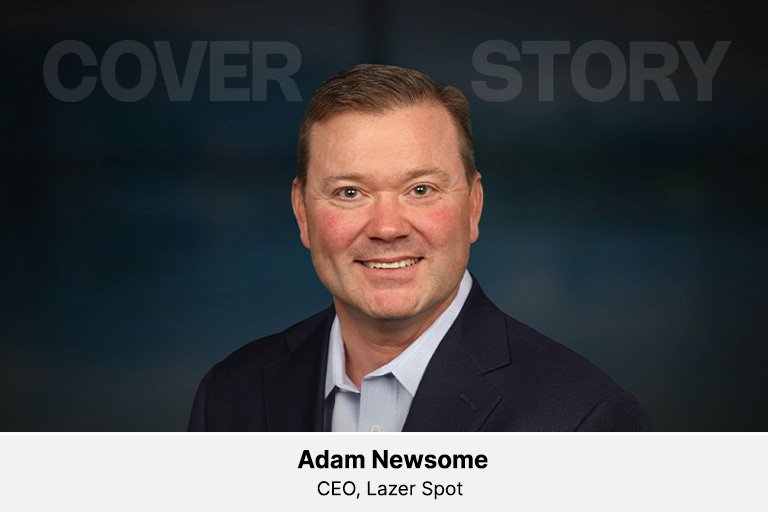
“We’re here to move businesses, and the people behind them, forward. Because every move in the right direction grows businesses, strengthens communities, and empowers our people, for good and for the better,” said Adam Newsome, CEO.
Drivers, gate agents and operators translate technology and process into execution. Better information helps, but discipline, judgment and care still determine what happens in the yard.
That philosophy extends to Lazer’s Employee Ownership Program, giving employees a direct stake in the business. The company connects ownership, servant leadership and safety with accountability: when operators and drivers have a stake in the outcome, the result is intended to be safer, more reliable service and highly engaged teams for customers.
Safety is treated as a daily operational practice rather than a marketing goal, designed to keep yards moving while reducing risk.
Electrification that still has to perform
The yard’s evolution is also changing the equipment inside it. Lazer has more than eight years of fleet electrification experience, with 150+ electric yard trucks and more than 3 million zero-emission miles logged.
But electrification in a working yard is not simply a vehicle purchase. Lazer’s EV solutions manage the transition from charging infrastructure to vehicle deployment so enterprise shippers can pursue emission targets without losing yard velocity or throughput.
The principle is the same: innovation has to work in the operation.
The next chapter
At 30 years, Lazer intends to keep expanding into new geographies and industries while deepening its existing footprint rather than pursuing growth for growth’s sake. The company is continuing to develop LLOS, adding new AI capabilities this year, while expanding its EV fleet program as charging infrastructure becomes more widely available.
For decades, the yard could operate as a gap between transportation and the warehouse. The next generation is moving in the opposite direction: more visible, connected and accountable to what happens upstream and downstream.
Lazer’s story mirrors that shift. A company that began with one spotter truck now operates at the intersection of people, technology and operations across hundreds of sites.
Thirty years after that first truck in Macon, the work is still about making the right move. What has changed is how much depends on it.