
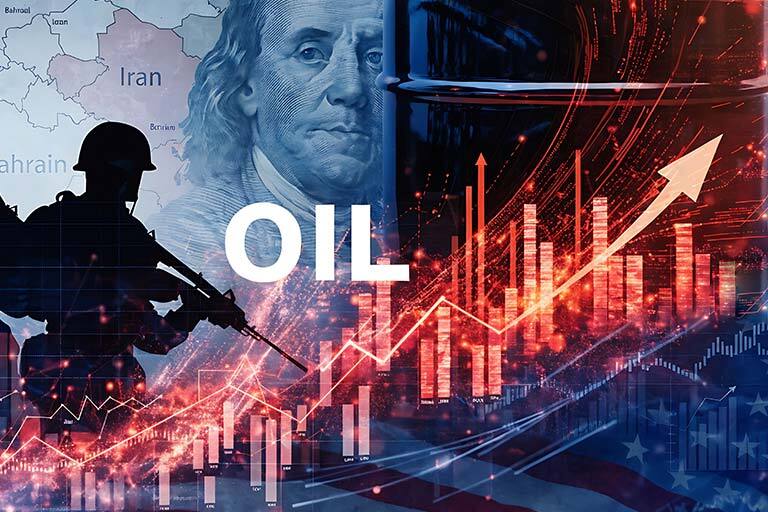
An economic warning has been issued by EJ Antoni, who was previously chosen by Donald Trump to lead the Bureau of Labor Statistics. According to Antoni, the United States economy is currently too weak to withstand a sharp rise in oil prices to $100 per barrel, particularly as tensions linked to the Iran conflict continue to drive energy costs upward.
It was conveyed that the economy is in a more vulnerable state than previously assumed, with inflationary pressures already stronger than expected. Lower energy prices earlier in 2025 had contributed to easing inflation, but a reversal of that trend is now anticipated as fuel costs climb again.
Antoni, who serves as chief economist at the Heritage Foundation, had been nominated in August to head the Bureau of Labor Statistics after the removal of the previous commissioner. That dismissal followed criticism from Trump over a disputed jobs report. However, the nomination was withdrawn within a month, and government economist Brett Matsumoto was later selected, pending Senate confirmation.
Concerns about the broader economic outlook have intensified alongside geopolitical developments. The resignation of Joe Kent, who stepped down in opposition to the Iran war, has added to the uncertainty surrounding US policy and stability.
At the same time, rising energy costs have begun to alarm Republican leaders, who fear that escalating oil prices could negatively affect their prospects in upcoming midterm elections. Brent crude prices surged by around 5 percent, approaching $110 per barrel, reflecting growing supply concerns tied to the conflict.
Fuel prices across the United States have increased significantly, placing pressure on both households and businesses. Petrol prices have climbed to $3.84 per gallon from $2.92 just a month earlier, while diesel prices have crossed the $5 mark, further straining transportation and production costs.
Recent economic indicators have reinforced concerns about slowing momentum. Growth in US gross domestic product for the fourth quarter of 2025 was revised downward to 0.7 percent from an earlier estimate of 1.4 percent. Additionally, wholesale prices rose faster than expected in February, even before the escalation of the Iran conflict.
The labor market has also shown signs of weakness, with a reported loss of 92,000 jobs in the previous month, erasing much of the gains recorded in January. Limited job growth has been highlighted as an ongoing issue, partly linked to earlier reductions in the federal workforce.
Further criticism has been directed at the Bureau of Labor Statistics, with calls being made for a comprehensive review of its operations. It has been suggested that improvements are needed across all stages, including data collection, processing, and dissemination, amid concerns about reliability and potential data leaks.