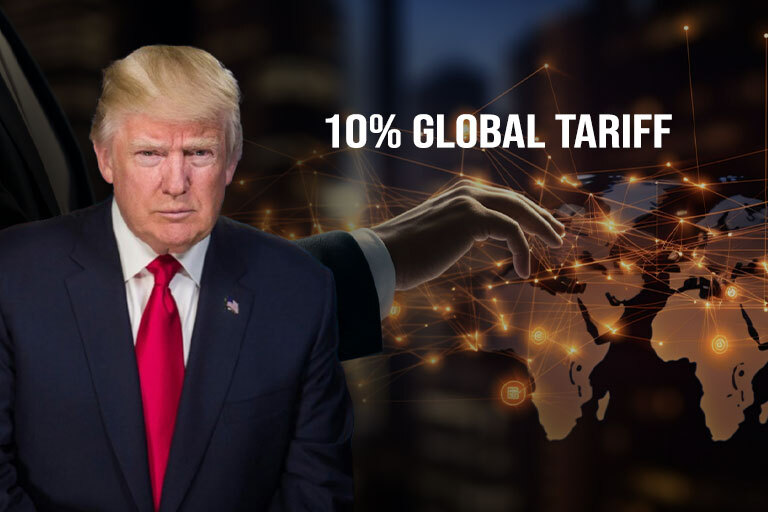
United States President Donald Trump slapped a new 10% tariff on imports from nearly every country in the world, ending months of uncertainty about the measure just hours after the Supreme Court invalidated most of the sweeping trade duties introduced by his administration last year. Calling the decision “terrible,” Trump attacked the justices who voted against his policy and said that his administration would seek other legal avenues to keep up tariff pressure.
In a 6–3 decision, the court held that the president had failed to stay within his bounds by using the 1977 International Emergency Economic Powers Act (IEEPA) to impose sweeping import taxes on goods from virtually every country. The court ruled that Congress had not explicitly given the executive branch open-ended power to impose tariffs under that statute. In an opinion by Chief Justice John Roberts, the majority said that when Congress authorizes the president to impose tariffs, it does so in express and narrow terms.
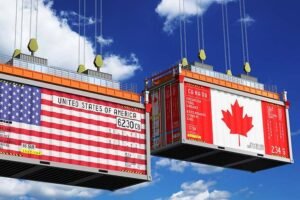
The decision was a stinging setback for the administration’s trade strategy, which had begun with an effort to target imports from Mexico, Canada, and China before expanding to dozens of trading partners in one of a series of policy shifts that had the White House calling it “Liberation Day.” The tariffs were justified as a way to boost the country’s own manufacturing and diminish trade imbalances, but they also drew legal action by U.S. states, small businesses, and major corporations, who accused the measures of raising their costs and damaging their supply chains.
Hours after the ruling, Trump signed a proclamation that established a new 10% tariff under Section 122 of U.S. trade law, which permits temporary tariffs for up to 150 days while Congress considers legislation. The new duties will come into effect on February 24, with exceptions for certain minerals, natural resources, fertilizers, pharmaceuticals, some agricultural products, and items such as electronics and particular vehicles. Canada and Mexico will still gain exemptions under the U.S.-Mexico-Canada Agreement (USMCA).
A White House official said countries, including the United Kingdom and India, along with European Union members that previously secured trade concessions with Washington, would now face a consistent 10% rate under Section 122, though the administration anticipates existing deals to continue.
The decision was greeted cautiously but positively by financial markets, where the S&P 500 rose roughly 0.7% as investors sorted through its implications. Businesses that had challenged the prior tariffs called the ruling a relief, while it remains to be seen what will happen with potential refunds on duties already collected. The government has collected at least $130 billion under the tariffs “based on IEEPA,” and how any reimbursement will be undertaken is likely to spur more litigation.
Legal analysts said the administration could continue to use other trade laws, such as Section 232, which deals with national-security issues, and Section 301, an enforcement mechanism for unfair trade practices. Those tools have been used before to impose tariffs on steel, aluminum, and automobiles and were not touched by the court’s ruling.
The development complicates the global trade outlook, as governments and businesses around the globe are parsing out ever-increasing layers of legal and policy considerations in President Trump’s import tariff program.